

You hit a perfect drive down the middle. Then you chunk a chip, race your first putt past the hole and walk off with a double bogey. Sound familiar?
If you have been playing for a while and your scores refuse to drop, you are not alone. Most golfers practice hard but in the wrong places. Learning how to get better at golf is much about knowing where your strokes go, then fixing those areas first.
Here is a useful starting point: roughly 60% of the shots in a typical amateur round happen within about 100 yards of the green. That means chipping, pitching and putting decide most of your score, not your driver.
This guide gives you a complete, step-by-step plan. You will learn how to:
- Measure your game and find your real weaknesses
- Turn your stats into a clear improvement plan
- Sharpen your short game and putting
- Hit straighter tee shots
- Manage the course like a low handicapper
- Practice with purpose instead of just hitting balls
- Strengthen your mental game and golf fitness
Whether your goal is to break 100, 90 or 80, or reach a certain handicap, these tips will help you get there faster.
Start by Assessing Your Current Game
The first step in getting better at golf is knowing exactly where you stand. You can't improve what you don't measure.
Why Guessing Doesn't Work
Most golfers believe their driver is the problem. When they finally look at the numbers, they often find three-putts and missed up-and-downs cost far more. A bad memory of one wild drive feels bigger than six wasted strokes around the green.
Tracking your stats replaces those guesses with facts. Once you know where the strokes go, you know where to spend your practice time.
Which Golf Stats to Track
You don't need tour-level data. For three to five rounds, record these simple numbers:
- Fairways hit: How often your tee shot finds the fairway on par 4s and par 5s.
- Greens in regulation (GIR): Reaching the green in two shots fewer than par.
- Putts per round: Including how many three-putts you make.
- Up-and-down percentage: How often you get down in two shots from just off the green.
- Sand saves: How often you get up and down from a greenside bunker.
- Penalty strokes: Balls lost, out of bounds or in hazards.
After a few rounds, patterns appear quickly. A golfer averaging 38 putts has a clear first project.
Track Your Stats Hole by Hole With Golf GameBook
Writing stats on a paper scorecard works, but it is slow and easy to give up on. A scoring app makes tracking almost effortless.
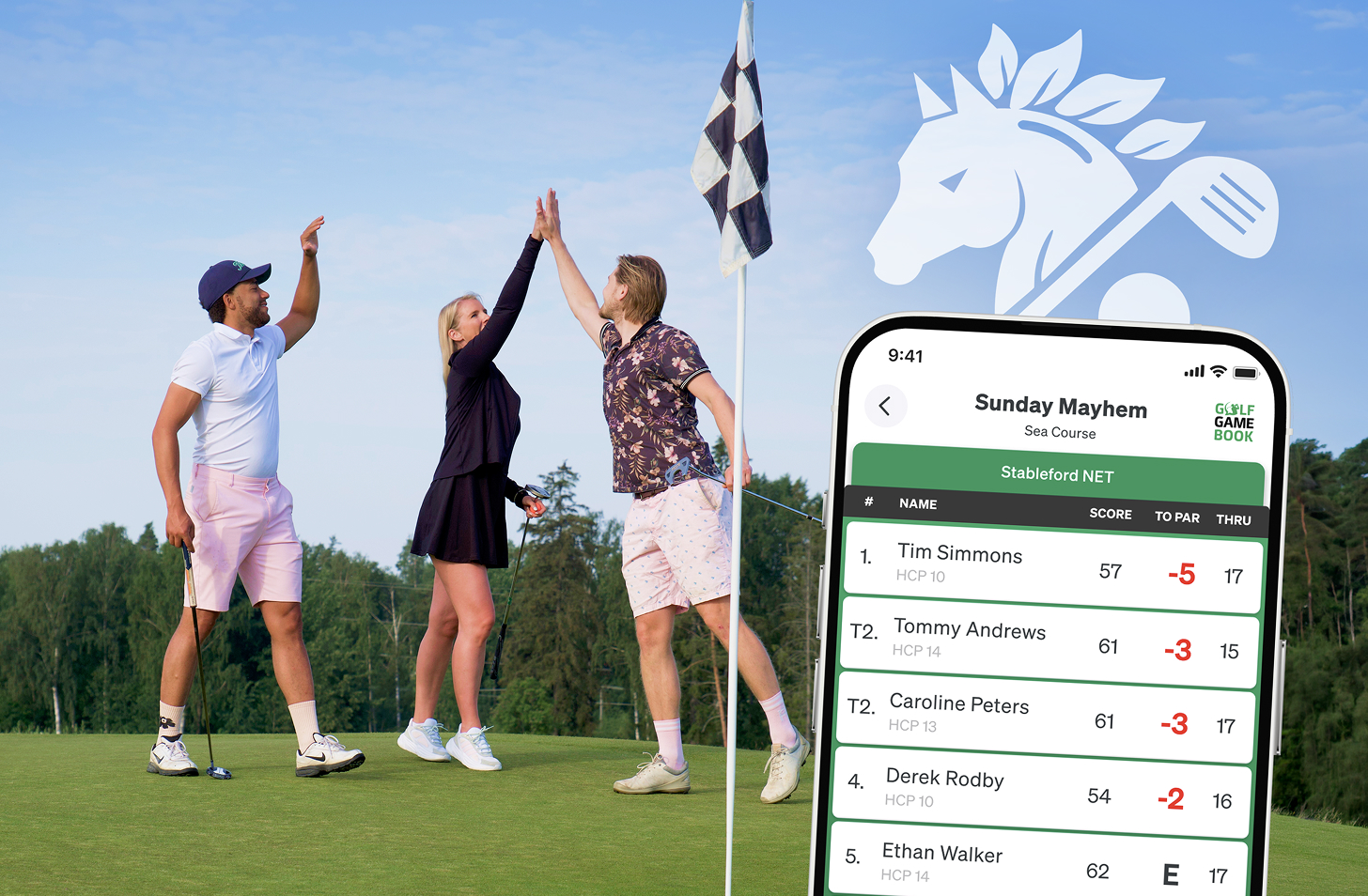
Golf GameBook is a golf scorecard app built around this kind of tracking. After each hole, the app asks you for a few quick numbers, such as whether you hit the fairway, and how many putts, chips, sand shots, or penalties you took.
From those simple inputs, Golf GameBook calculates a wide range of advanced stats for your long game and short game. You get a detailed picture of your round without carrying a notebook or filling in a spreadsheet afterwards.
Set Realistic Goals
With your stats in hand, choose one clear goal. Typical milestones look like this:
- Break 100: Cut penalty strokes and three-putts.
- Break 90: Improve chipping and hit more fairways.
- Break 80: Hit more greens and convert more up-and-downs.
Small, measurable goals keep you focused and show you that your work is paying off. The next step is to turn your goal into a concrete plan.
Turn Your Stats Into an Improvement Plan
Collecting stats is only the first step. The real value comes from knowing what those numbers mean for your game and what to work on next.
This is where most golfers get stuck. They know they averaged 35 putts, but is that good or bad for their level? Golf GameBook answers that question for you.
Set a Handicap Goal and See How You Compare
Start by setting a handicap goal in the app, for example dropping from 22 to 18. Golf GameBook then tracks your strengths and weaknesses compared to a typical golfer at that handicap level.
Instead of comparing yourself to tour players, you see where you already play like an 18-handicapper and where you fall short. Your putting might already be at goal level, while your approach shots are costing you three strokes a round. That tells you exactly where your next hour of practice should go.
Get Clear Targets for Each Area of Your Game
Based on the stats you log during your rounds, Golf GameBook gives you targets for different areas of your game. Your tee shots (fairway hits), approach play (green hits), short game (up&downs) and putting each get their own benchmark.
Targets turn vague intentions into measurable steps. "Putt better" becomes a specific number to reach. Each time you play, you can see whether you moved closer to that target or drifted further away.
Track Your Playing Level Automatically With GGB Handicap
Your handicap is the best single measure of whether you are getting better at golf. Calculating it by hand, or waiting for official updates, makes it hard to see progress.
GGB Handicap tracks your playing level automatically as you log rounds in the app. You can see at a glance whether your practice is paying off, and when you are getting close to your handicap goal.
Build a Simple Improvement Loop
Put these features together and you have a repeatable process for improving:
- Play a round and log your stats after each hole.
- Check which game area is furthest from your handicap-goal target.
- Spend most of your practice time that week on that area.
- Play again and see whether the gap has closed.
- Watch GGB Handicap to confirm your overall level is moving in the right direction.
The sections below cover how to improve each game area, so you can act on whatever your stats reveal.
Improve Your Short Game (The Fastest Way to Lower Scores)
If you want to know how to get better at golf quickly, start around the green. A better short game turns bogeys into pars and doubles into bogeys, often within weeks. Taking lessons from a professional coach usually is the safest way to improve technique, but the internet is full of useful tips and drills for practicing for those who dare. We gathered some of them here.
Chipping Basics
A chip is a short, low shot that spends more time rolling than flying. Set up like this:
- Narrow stance with about 60% of your weight on your lead foot.
- Ball slightly back of center.
- Hands slightly ahead of the ball.
- A putting-style stroke driven by your shoulders, with quiet wrists.
Use the bump-and-run whenever you can. Pick a club like a 7-iron or 8-iron, land the ball just onto the green and let it roll like a putt. Low shots are easier to control than high, floating ones.
A useful rule: get the ball on the ground as soon as possible. Only use a lofted wedge when you must carry a bunker or rough.
Pitching From 30–80 Yards
Pitch shots fly higher and stop faster than chips. The biggest challenge is distance control, and the clock system solves it.
Imagine your arms are the hands of a clock. Make backswings to 7:30, 9:00 and 10:30 with the same smooth tempo. Hit 10 balls at each length with each wedge and note the average carry distance. Within one session, you will have a reliable chart of distances.

Bunker Play Made Simple
Greenside bunker shots scare many golfers, but the technique is simpler than it looks. You don't hit the ball at all. You hit the sand and the sand lifts the ball out.
- Open the clubface before you take your grip.
- Dig your feet in slightly and play the ball forward in your stance.
- Aim to strike the sand about two inches behind the ball.
- Swing fully and accelerate through to a high finish.
The most common mistake is slowing down at impact. Commit to the swing, and the ball will come out every time.
Short Game Drills
- Ladder drill: Chip to targets at 5, 10 and 15 feet past the fringe. Move up a rung only after landing three in a row inside a club length.
- Landing spot drill: Place a towel on the green and try to land each chip on it. This trains you to pick a spot rather than stare at the hole.
- Up-and-down challenge: Drop nine balls in different lies around the green. Play each one until holed and count how many you get up and down. Track the score each week.
Practice tip: If you only have one hour to practice, spend at least 40 minutes on the short game and putting.
Become a Better Putter
Putting can make up 40% or more of your strokes in a round. Shaving even four putts per round is one of the easiest ways to lower your scores.
Speed Control Matters More Than Line
Most three-putts come from poor speed, not a poor read. A long first putt that finishes six feet away leaves a tough second putt. One that finishes inside two feet is almost a guaranteed tap-in.
On long putts, focus on distance first. Picture the ball finishing in a three-foot circle around the hole. Aim to make the ball roll about 12–18 inches past the cup on shorter putts, so it has enough pace to hold its line.
Reading Greens
Green reading starts as you walk onto the green. The overall slope is often easiest to see from 20–30 yards away.
- Look at the putt from behind the ball and from the low side of the hole.
- Feel the slope through your feet as you walk.
- Notice where water would drain off the green.
- On grainy grasses, the ball rolls faster with the grain and slower against it.
Pick your line, then commit to it. Second-guessing over the ball causes more missed putts than a slightly wrong read.
Build a Repeatable Putting Routine
A routine keeps you calm and consistent under pressure. A simple version could look like this:
- Read the putt from behind the ball.
- Take two practice strokes while looking at the hole to feel the distance.
- Set the putter behind the ball and align your body.
- Take one last look at the target, then stroke it.
Use the same routine on every putt, from two feet to 40 feet.
Putting Drills
- Gate drill: Place two tees just wider than your putter head, about a foot from the hole. Stroke putts through the gate to train a square face and centered contact.
- Ladder drill: Putt to targets at 20, 30 and 40 feet. Aim to finish each ball within a putter length of the target.
- Circle drill: Place six balls in a circle three feet from the hole. Hole all six in a row before you leave. Then move out to four feet.
As a benchmark, aim for fewer than 34 putts per round. Once you get there, set your next target at 32, then 30.
Hit Longer, Straighter Tee Shots
A good drive doesn't need to be your longest drive. It just needs to keep you in play and set up a manageable second shot.
Choose Accuracy Over Distance
A 230-yard drive in the fairway beats a 270-yard drive in the trees almost every time. Penalty strokes and punch-outs from bad tee shots add up faster than lost yardage.
Pick a specific, narrow target on every tee, such as a tree in the distance or the left edge of a bunker. A precise target gives your swing a clear goal and tightens your misses.
Set Up for the Driver
Small setup changes make a big difference with the driver:
- Tee height: About half the ball should sit above the top of the clubface.
- Ball position: Just inside your lead heel.
- Spine tilt: Lean your upper body slightly away from the target so your trail shoulder sits lower.
- Swing thought: Sweep the ball off the tee on a slight upswing rather than hitting down on it.
Keep your tempo smooth. Swinging at 80% effort usually produces better contact, and better contact often adds distance.
Know When to Leave the Driver in the Bag
On tight holes, or when trouble sits right where your driver usually lands, take a 3-wood, hybrid or long iron instead. Many good players hit fewer drivers than you might think.
Your stats will tell you whether this matters for you. If your fairway percentage is low and penalty strokes are high, a more conservative club off the tee could save several shots per round.
Play Smarter With Course Management
You can lower your scores tomorrow without changing your swing. Better decisions on the course are often worth more strokes than months of range work.
Know Your Real Yardages
Most amateurs come up short on approach shots because they plan around their best-ever distance with each club. Plan around your average distance instead.
Build a simple yardage chart for every club, from the driver down to your wedges. Then use accurate distances on the course. A GPS app such as Golf GameBook shows yardages to the front, middle and back of the green, so you can choose clubs based on real numbers rather than guesses.
Aim for the Middle of the Green
Tour players rarely aim at tucked pins, and you shouldn't either. Aiming at the center of the green gives you the most room for error on every side.
A 30-foot putt from the middle of the green is far better than a short-sided chip from deep rough. Over a round, this one habit can save three or four shots.
Avoid the Big Numbers
Triple bogeys and worse wreck more scorecards than anything else. They usually come from one bad shot followed by a risky recovery attempt.
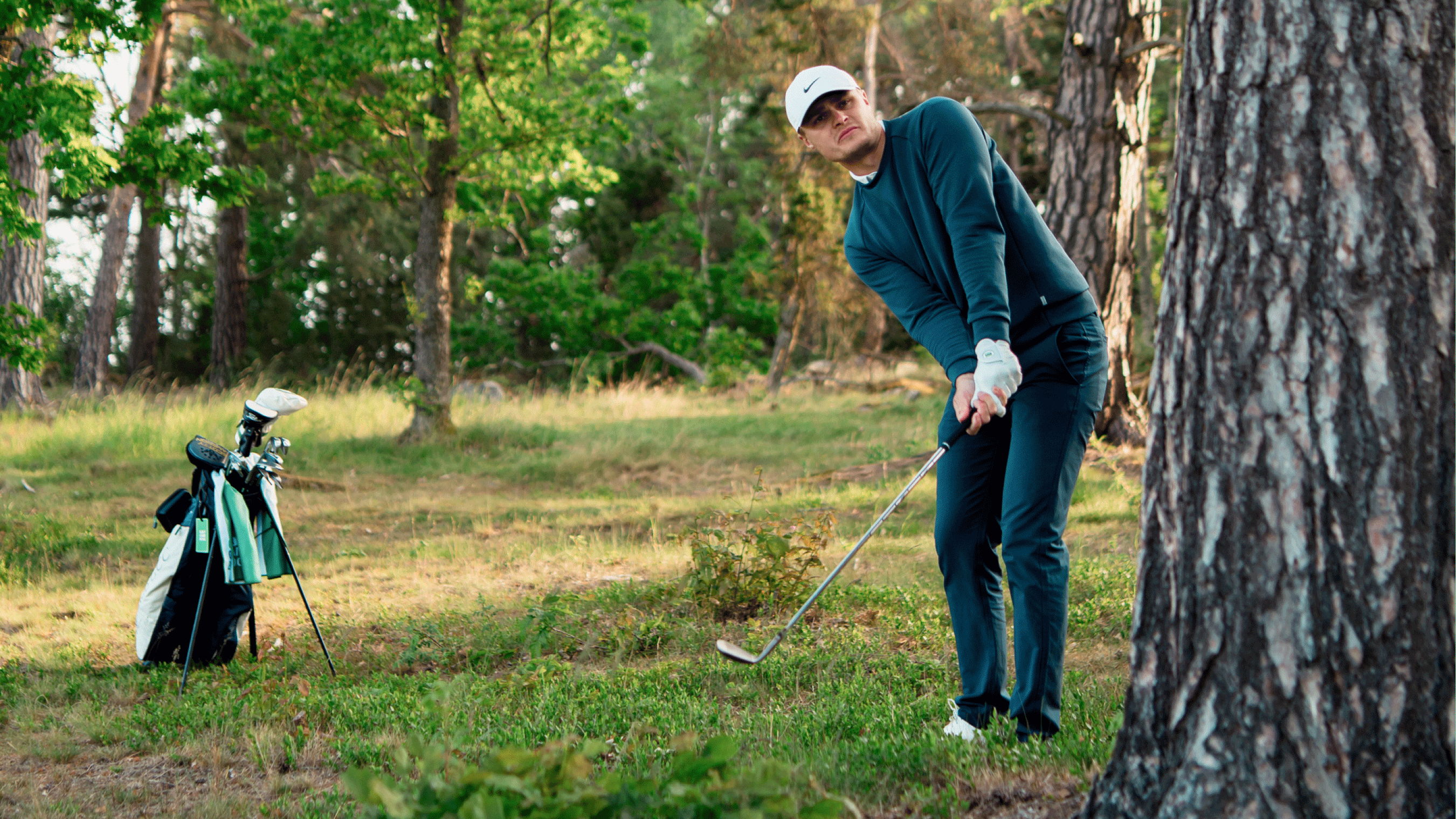
When you find trouble, take your medicine. Chip back to the fairway instead of threading a shot through a tiny gap in the trees. Turning a potential triple bogey into a bogey is a win.
Here is a common example. Your drive lands behind a tree, 160 yards out. The hero shot is a low hook around the tree to the green. The smart shot is a punch-out to 100 yards, a wedge onto the green and two putts for bogey. The hero shot might save a stroke once in five tries. It costs you two or three strokes the other four times.
Play to Your Strengths
If your favorite club is a full pitching wedge from 100 yards, plan your layups to leave that distance. On a par 5 you can't reach in two, two comfortable shots to your favorite yardage beat a long fairway wood into trouble.
The same goes for misses. If your common miss is right, aim a little left of center and let your natural shape work for you.
Practice Smarter, Not Just More
Hitting a large bucket of balls with your driver feels productive, but it rarely lowers scores. How you practice matters more than how long you practice.
Block Practice vs. Random Practice
Block practice means hitting the same club at the same target again and again. It builds confidence and is useful for learning a new move.
On the course, though, you never hit the same shot twice in a row. Random practice changes the club, target and shot every ball, which is much closer to real golf.
A good session uses both: some block practice to groove a move, then random practice to test it.
Let Your Stats Decide What to Practice
Your round data should shape every practice plan. Open Golf GameBook, review your last five rounds and check which game area is furthest from its target.
- Averaging 36+ putts? Make putting your main focus.
- Low up-and-down percentage? Spend extra time chipping and pitching.
- Few fairways and lots of penalty strokes? Work on tee shots and a reliable "fairway finder" club.
After a month, check whether that number has improved. If it has, move on to your next weakest area. This simple loop of measuring, practicing and re-measuring is how golfers improve steadily.
Build a Weekly Practice Plan
If you have about three hours a week, a balanced plan might look like this:
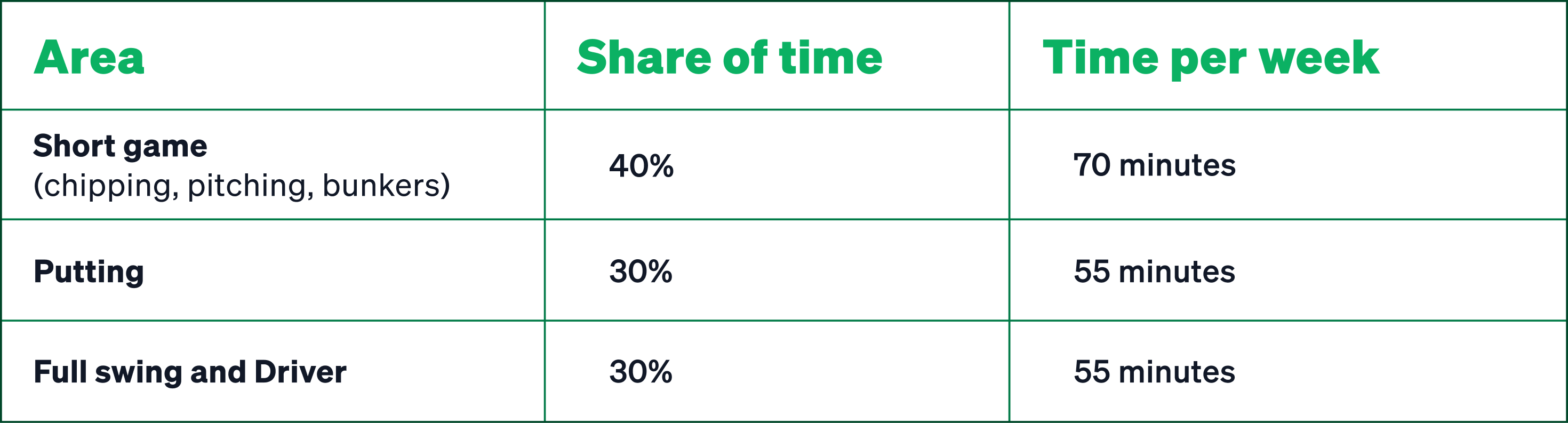
Adjust the split based on your stats. A golfer who putts well but loses balls off the tee should shift time toward the full swing.
Practice With Purpose
Every shot on the range should have a target and a goal. Go through your full pre-shot routine, just as you would on the course.
Play "range rounds" too. Picture the first hole at your home course, hit a driver, then the iron you would need for your second shot. Play all 18 holes this way with a single ball per shot.
Practising at Home
You don't need a range to improve. A putting mat, a mirror and a net can make a big difference.
- Practice short putts on a mat for 10 minutes a day.
- Check your grip, posture and alignment in a mirror.
- Make slow-motion swings to rehearse positions.
- Hit foam balls or chip into a laundry basket in the backyard.
Strengthen Your Mental Game and Fitness
Golf is played as much between the ears as with the clubs. Your body also needs to move well enough to make a good swing.
Develop a Pre-Shot Routine
A consistent pre-shot routine calms your nerves and focuses your mind. It should take about 20–30 seconds.
Stand behind the ball and pick a precise target. Take one or two rehearsal swings that match the shot. Walk in, set up, take one look at the target and swing. Repeat the same steps on every full shot.
Manage Frustration
Every golfer hits bad shots. What separates good players is how quickly they let them go.
Try the 10-second rule. Give yourself 10 seconds to feel annoyed after a poor shot, then let it go completely. By the time you reach your ball, your focus should be on the next shot only.
Stay in the present. Thinking about your score or a bad hole earlier in the round adds tension and leads to more mistakes.
Golf Fitness Basics
You don't need to be an athlete to play good golf, but basic fitness helps. Mobility in your hips and upper back lets you make a full turn without straining your lower back.
Focus on three areas:
- Mobility: Hip openers, thoracic spine rotations and hamstring stretches.
- Core stability: Planks, side planks and dead bugs to control your body through the swing.
- Warm-up: Five to ten minutes of dynamic stretches and easy swings before every round.
A proper warm-up alone can improve your first few holes and reduce injury risk.
Get the Right Equipment and Coaching
Equipment won't fix a broken swing, but the wrong gear can hold you back. Good coaching speeds up everything in this guide.
Get Properly Fitted Clubs
Clubs that are too long, too short or too stiff force you to make compensations. A club fitting checks length, lie angle, shaft flex and grip size for your body and swing. Beginners can start with a basic set, but a fitting is worth it once your swing becomes more consistent.
Choose the Right Golf Ball
Most amateurs don't need a tour-level ball. If your swing speed is moderate, a softer, lower-compression ball can give you more distance and a better feel. Pick one model and stick with it, so every chip and putt reacts the same way.
Take Lessons From a Professional Coach
As mentioned earlier, a few lessons with a qualified professional coach can save you years of trial and error. A coach spots faults you can't feel and gives you drills that fit your swing. Share your round stats with your coach so lessons focus on the areas costing you the most strokes.
Use Technology Wisely
Launch monitors, swing video and stat-tracking apps all help, as long as you use them with a clear goal. Record your swing on your phone from face-on and down-the-line views. Combine that with the round data you are already logging, as covered earlier, to see whether changes on the range carry over to the course.
Frequently Asked Questions About Getting Better at Golf
How long does it take to get better at golf?
Most golfers see noticeable improvement within two to three months of focused practice. Breaking a major barrier, such as 90, often takes six months to a year, depending on how often you play and practice.
What is the fastest way to lower my golf score?
Improve your short game and putting, and make smarter decisions on the course. These areas account for most of your strokes and respond quickly to practice.
How often should I practice golf to improve?
Two or three focused sessions per week, plus one round, is enough for steady progress. Short, regular sessions beat one long session per month.
Can you get better at golf without lessons?
Yes. Tracking your stats, practising with purpose and studying good technique can take you a long way. Lessons simply speed up the process and help you avoid bad habits.
What is the best way to track my golf stats?
A scorecard app is the easiest option. Golf GameBook asks for a few stats after each hole and calculates advanced stats from them. It also compares your game to your handicap goal and tracks your playing level automatically with GGB Handicap.
What is a good score for a beginner golfer?
Breaking 100 on a full-length course is a great first goal for most beginners. From there, many golfers aim to break 90 within their first few seasons.
Conclusion: Your Plan to Get Better at Golf
Learning how to get better at golf comes down to a simple loop. Measure your game, find your biggest weakness, practice it with purpose, then measure again.
Set a handicap goal, follow the targets your stats give you, spend most of your practice time on the short game and putting, and make smarter decisions on the course. Stay patient and keep your goals realistic, and the lower scores will follow.
Ready to start? Download Golf GameBook, log your next three rounds, and use your stats to build your first practice plan.